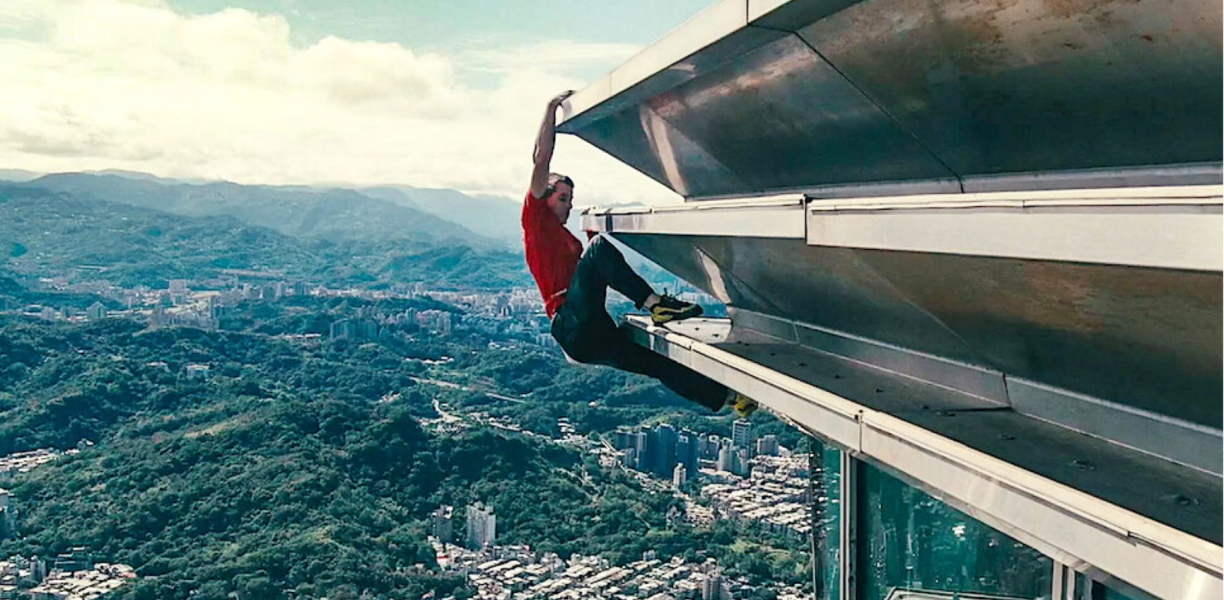
On January 24, Alex Honnold climbed Taipei 101 free solo scaling all 101 floors of the skyscraper without ropes.
This wasn’t his first historic climb. Honnold famously became the first person to free soloed El Capitan in Yosemite National Park.
The skyscraper is a completely different feat.
The structure is fully vertical, repetitive, physically taxing, and unpredictable in ways natural rock faces aren’t.
Pulling off a climb like this requires another level of mental prowess.
The climb was streamed live on Netflix, and in interviews leading up to the event, Honnold spoke openly about his mindset and the mental skills that allowed him to complete this task.
So, what mental skills did he use?
Visualization
During the broadcast, Honnold revealed that visualization is a key part of his preparation for every climb, and that his mental preparation is crucial to his physical preparation.
“When I visualize a climb like Taipei 101, I’m thinking about what it’ll feel like, and that’s kind of the whole point of doing the visualization, is to experience those emotions ahead of time so that I don’t experience them while I’m doing the climb,” he said.
“It’s this mental preparation that informs my physical training.
A lot of my training for Taipei 101 is different than rock climbing. It’s more around simulating the feeling in my body, which is sort of deep fatigue.”
Self-talk
When something unexpected happens, Honnold’s internal dialogue isn’t motivational or emotional – it’s practical and regulating.
As he explains, “My self-talk just has to do with taking some deep breaths and calming down my body.”
He stays anchored in the present moment by focusing on breathing and composure.
He also reframes the situation in a calm, reality-based way, noting that “once you’ve registered that it’s happened, it’s already happened… you didn’t fall off.”
This helps him shut down panic and return attention to the task.
Mindfulness and acceptance
Honnold describes fear not as something overwhelming, but as a physical sensation that closely resembles excitement or nervous energy.
“In your body it feels a lot like excitement or nervousness… it’s just like a tingling energy,” he explains.
Rather than fighting these sensations, he observes them without judgment.
As he puts it, “Just because you’re feeling something in your body doesn’t necessarily have to have an impact on the way you act.”
This reflects a meditative, non-judgmental awareness that allows fear to exist without controlling behavior.
Present-moment awareness
Throughout the climb, Honnold’s focus remains on executing the next movement rather than thinking about the height, the risk, or the audience watching live.
He minimizes external pressure by reframing the situation: “I don’t really care who’s watching. I care about doing what I’m doing and doing it well.”
When his rhythm is disrupted, he intentionally slows down, emphasizing that “there’s never any time pressure, so you can spend as long as you need just hanging in one space basically trying to compose yourself.”
Process goals
While reaching the top is important, Honnold defines success by how he performs and feels during the climb.
“I want to feel good while I do it. I want to smile and enjoy myself,” he says.
Drawing parallels to ultramarathons, he explains that his goal is to “not injure myself and comport myself with dignity… cross the finish line with a smile.”
He focused more on the process than the outcome. This helped him complete this task with calmness and composure.
—
Honnold’s climb shows that elite performance isn’t about being fearless, but about responding to pressure with calm self-talk, presence, and a focus on the process.
When the stakes are highest, mental skills are what helps athletes perform at their best.