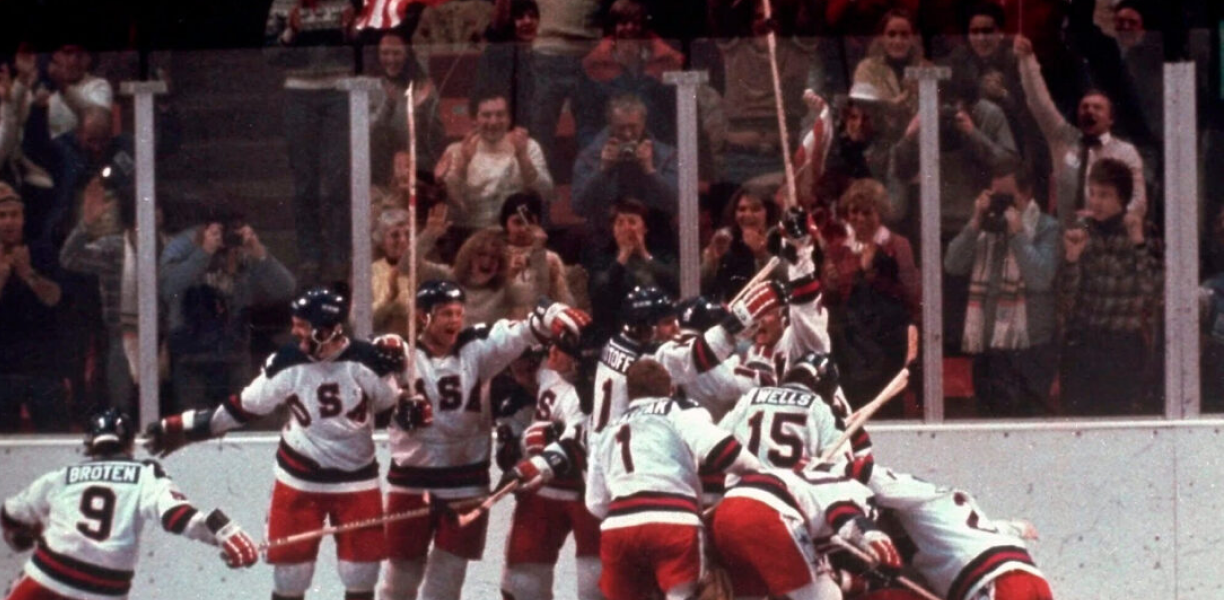
When the Winter Olympics roll around and the men’s ice hockey tournament begins, it’s near-on impossible for broadcasters to avoid mentioning The Miracle on Ice.
The incredible game in 1980 when the US, a team comprised of college students, beat the USSR, a machine-like team that had won gold at the previous four Olympics.
The game in Lake Placid has since become the subject of countless books, two feature films and numerous documentaries, the latest being Netflix’s Miracle: The Boys of ‘80.
While the documentary details their coming together, their ruthless training under coach Herb Brooks and the social impact of the game on a country in the midst of a recession, one story sticks out.
How the hero of the game used a key mental skill to prepare to face the USSR, one of the greatest Ice Hockey Teams assembled.
To say the US were the underdogs was an understatement, two weeks before the game in Lake Placid, they were dismantled by the Soviets 10-3 at Madison Square Garden.
While the US would win in Lake Placid 4-3, the stats show how strong the USSR really were with the shot count 39-16 in the Soviet’s favor.
US Goalie Jim Craig was the hero, making an incredible 36 saves.
Teammate Ken Morrow said that he “kept us in it, playing out of his mind”.
Funny thing is it was Craig’s mind that prepared him for the moment.
Speaking 46 years on from playing the game of his life, Craig revealed he had used Visualization ahead of the historic game.
“I never visualized losing,” Craig said in Miracle: The Boys of ‘80.
“I visualized the game and what could happen.
“What the play was, what it looked like.
“So that when the game came, I’d already seen it.”
Research shows that when athletes like Craig visualize themselves doing something, the same neurons are activated as if they were physically performing the task in real time.
Studies show that it can help to improve confidence, decision-making, and reaction time, especially in high pressure moments.
In Craig’s case, visualization allowed him to become more familiar with what he was about to face, rather than enter the game in fear.
He had already mentally ‘been there’ and seen himself in that environment.
His performance wasn’t improvised under pressure; it was executed from a script he had already rehearsed in his mind.
Visualization is accessible, simple, and adaptable for athletes at any level.
Just like Jim Craig showed in 1980 – when you’ve already seen it, you’re far more ready to live it.