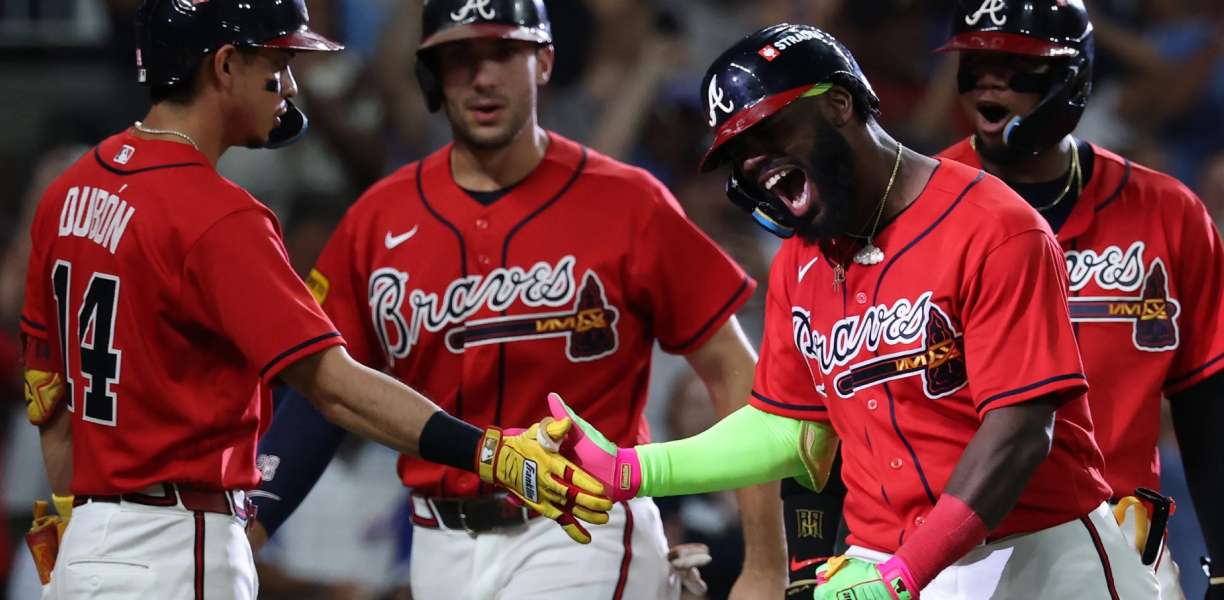
In a best-of-three Wild Card series, there is no time to settle in. One bad inning can end a 162-game season.
This year’s round delivered exactly that. The Yankees eliminated the Red Sox in baseball’s oldest rivalry. Fernando Tatis Jr. carried the Padres past the Cubs. The Phillies and Braves went the distance to a winner-take-all Game 3.
The players on both sides of those games were equally skilled. The difference often came down to who could keep their skills working when the stakes made everything feel heavier. That’s a mental skill, and it can be trained.
Why pressure breaks good swings
Pressure doesn’t make athletes forget how to play. It makes them think too hard about how they play.
A swing or a pitching delivery is built over thousands of reps until it runs on autopilot. Under high stakes, athletes start consciously checking those movements: Is my hand path right? Am I opening up early? Psychologists call this explicit monitoring, or reinvestment. Research led by Sian Beilock and Rich Masters found that skilled athletes perform worse when they turn attention inward onto well-learned mechanics.
In an elimination game, that shows up as the hitter who suddenly looks late on a fastball he crushed all season. Or the reliever who aims the ball instead of throwing it. The skill is still there. The athlete’s attention has gone to the wrong place.
Routines: making Game 3 feel like Game 63
The best defence against overthinking is a routine that gives attention a job. Watch any hitter in the box this October: the batting-glove adjustment, the step out, the same breath, the same look at the pitcher. That’s not superstition. It’s a pre-performance routine.
Good routines do three things:
- Narrow focus. They pull attention to a small number of external cues, like the release point, instead of the scoreboard or the crowd.
- Create familiarity. The routine is identical in a May road game and a winner-take-all October game. The situation changes, the process doesn’t.
- Trigger the automatic skill. The final step signals “thinking is over, now execute.”
The key is that routines are built in practice, not invented in the postseason. If an athlete only does it when the stakes are high, it becomes another thing to think about.
One pitch at a time: the reset
In a short series, the most dangerous pitch is the one after a mistake. A walk, an error or a three-run homer can hijack attention for the rest of the inning.
The late sport psychologist Ken Ravizza, who worked with MLB clubs including the Cubs and Angels, taught players to recognise their own “red lights”: the signs they’re speeding up, tightening up or dwelling on the last play. Then they use a physical reset to get back to “green” before the next pitch.
A reset can be simple:
- Release the last play with a physical cue, like wiping the dirt, adjusting the cap or stepping off the rubber.
- Breathe once, slowly.
- Refocus on one controllable target for the next pitch, like “hunt the heater middle-in” or “hit the glove.”
The goal isn’t to feel calm. It’s to make sure the next pitch gets 100% of the athlete’s attention, not what’s left after the last one.
Turning the dial down (or up)
Postseason adrenaline is real. Heart rate climbs, grip tightens, and fine motor control, the feel a pitcher needs on a breaking ball, starts to slip. Hitters often feel it as rushing: jumping at pitches and chasing out of the zone.
The fastest lever an athlete controls is their breath. Slow breathing with a longer exhale than inhale engages the body’s “rest and digest” response and takes the edge off. Something as short as a four-second inhale and six-second exhale between pitches can help.
It works in the other direction too. A flat, under-aroused player in a quiet road park might need energising cues: quicker movement, upbeat self-talk, a sharp clap. The aim is each athlete’s own best zone. Knowing where that zone sits is something they learn long before October.
What this means for your program
Your athletes will face their own win-or-go-home moments, whether that’s a conference tournament, an NCAA regional or a bases-loaded at-bat in the ninth. The players who handle those moments best won’t be the ones who “want it more.” They’ll be the ones who trained their minds the way they trained their swings.
That means building routines, resets and breathing skills into the regular season, so they’re automatic when the pressure arrives.