Canada’s historic 6-0 World Cup win over Qatar has come at a grave cost.
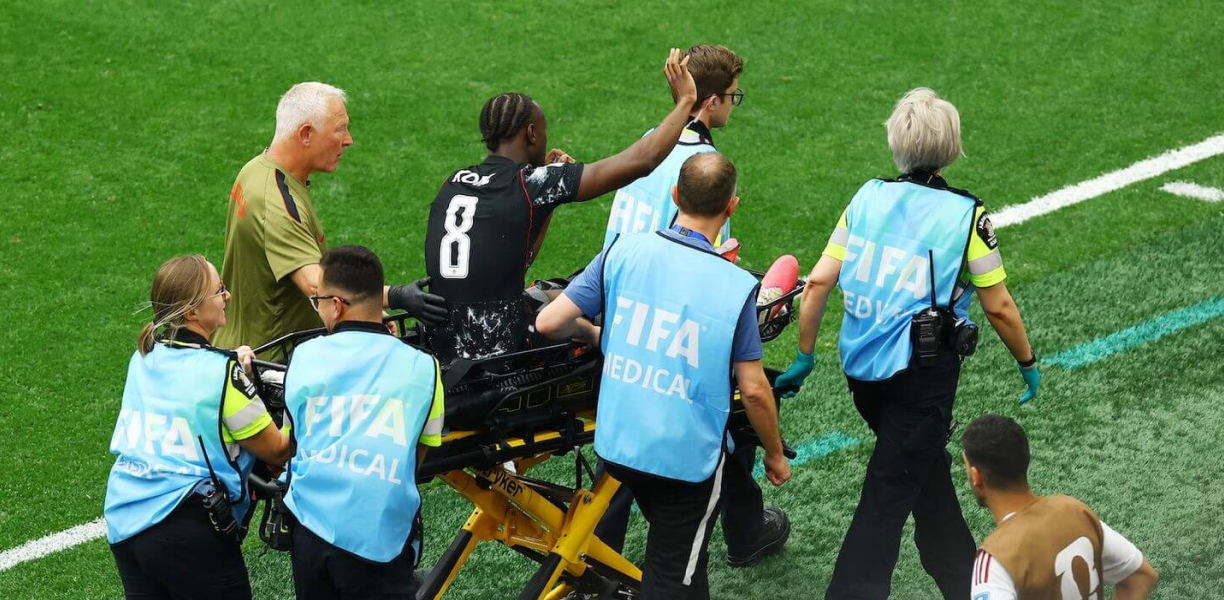
Key playmaker Ismaël Koné suffered a broken leg after a horror tackle by Assim Madibo which marred an otherwise perfect day for the co-hosts in what was Canada’s first win ever at a world cup.
The incident, which happened in front of the 55th minute as Canada led 3-0, didn’t derail their performance as Canada added a further three goals against the nine-man Qatar.
“It happened right in front of the bench; we could all hear it,” Canada’s manager Jesse Marsch said after the match.
“Your heart goes out to him, and everyone is a little shaken by the whole experience, because of the nature of the injury and because Ismael is a big part of the heart of our team.
“… Everybody was crushed when it happened, but we had to find a way to stay focused.”
While Canda was able to stay focused and performing at a high level, witnessing graphic injuries like Koné’s can have profound effects on athletes.
Here are mental skills that athletes can use to overcome fear of injury or the impact that witnessing injuries can have on performance.
Refocus on the Task
After witnessing an injury, athletes can find themselves start thinking negatively:
“What if that happens to me?”, “I need to avoid contact.” or”I shouldn’t go into that challenge.”.
These thoughts pull attention away from performance.
A useful strategy is to identify a simple performance cue to focus on what matters most.
“Next play”, “Win the ball”, “Stay aggressive” or “Strong first touch”
The goal is not to eliminate fear but to redirect attention toward the task at hand.
Positive Imagery to Redirect Thoughts
After seeing a traumatic injury like Koné’s, athletes may involuntarily replay the incident in their minds.
Quick structured imagery exercises during breaks in play can help replace those images with positive ones:
- Successfully making tackles
- Landing safely after a jump
- Cutting, turning, and accelerating confidently
- Competing aggressively and remaining healthy
The brain responds strongly to repeated mental rehearsal, making imagery a powerful tool for restoring confidence and reducing hesitation.
Acceptance and Emotional Regulation
Fear following a serious injury is a normal human response and the mistake many athletes make is trying to suppress it:
- “I shouldn’t be thinking about this.”
- “I need to stop being scared.”
Instead, athletes should acknowledge the emotion:
“I’m feeling nervous after seeing that injury, and that’s understandable.”
Then focus on controllable actions such as breathing, preparation, communication, and skill execution.
Athletes don’t need to eliminate fear before they perform. They need to learn how to perform effectively alongside it.
The goal isn’t to convince yourself that injuries can’t happen.
It’s to accept the risk inherent in sport while maintaining confidence in your preparation, skills, and ability to execute under pressure.
The athletes who recover quickly psychologically are usually those who acknowledge the fear, refocus on the present, and continue committing fully to their performance.