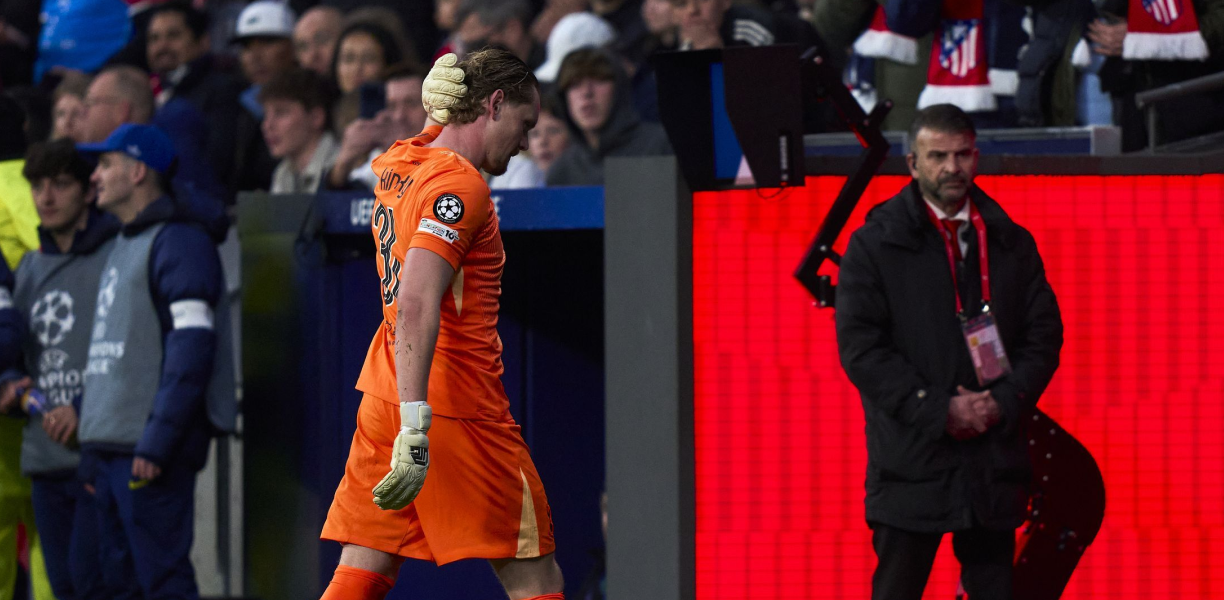
Last night in the UEFA Champions League, Tottenham Hotspur goalkeeper Antonín Kinský had a night he’ll want to forget.
A mistake on one of the biggest stages in world football, under immense pressure and in front of millions watching, is any athlete’s worst nightmare.
The real question is: how do athletes bounce back from moments like this?
During Performance
For the Athlete
Every athlete makes mistakes. One moment, one play, or even one game does not define an athlete’s career or ability.
What matters most is how they respond. Learning to accept mistakes as part of the performance process and changing your relationship with failure allows athletes to move forward rather than get stuck dwelling on what they did wrong.
It’s easy to reflect and grow after a performance, but it’s crucial that athletes have skills to overcome mistakes during.
After an error, mental reset strategies become critical. Tools like self-talk and focus cues help athletes regroup quickly.
Goalkeepers can write these cue words on their gloves to serve as reminders to reset after a mistake.
Simple reminders such as “Next play”, “Reset” or “Stay Present”, can help shift attention back to the task at hand. One mistake does not need to spiral into many.
For Coaches and Teammates
In Antonín Kinský’s case, Tottenham’s manager Igor Tudor appeared to ignore the forlorn keeper as he left the pitch.
Moments like this can significantly impact how an athlete processes the mistake.
When athletes feel unsupported in difficult moments, they may become hesitant around their coach and are less willing to fully express themselves or take risks in future performances.
Coaches can play an important role in how athletes process mistakes during a performance.
In this instance, a coach could reassure the athlete by helping them intentionally reflect on their performance rather than leaving them feeling isolated.
Providing immediate reassurance as Antonín Kinský left the pitch could have helped him process the moment more constructively.
Simple words like “keep your head up” or “we’ve got you” can make a big difference, reminding the athlete that they are still supported by the team.
Coaches can also reinforce that one mistake does not define an athlete’s career.
Showing continued belief in the player can help maintain confidence and make it easier for the athlete to bounce back from the setback.
Teammates also play a huge role in helping someone bounce back.
Support, encouragement, and simple gestures like a quick pat on the back or words of reassurance can remind the athlete that the team stands together.
Knowing that the team has their back can help athletes regain composure and confidence more quickly after a mistake.
After Performance
For the Athlete
Instead of dwelling on the error, athletes can ask: What can I learn from this?
Reflecting on what happened – be it technically, tactically, or mentally – can help transform a setback into useful feedback for the future.
This shift allows mistakes to become opportunities for growth rather than moments that damage confidence.
For example, Antonín Kinský might review the situation and reflect on whether the mistake came from positioning, decision-making under pressure, or communication with his defenders.
Identifying the specific factor can allow him to focus on improving that element in training and future matches.
Following this performance Kinský – and many other athletes in his position – will have their confidence shaken, so it’s important for athletes to draw upon their sources of confidence in these moments.
Athletes reach the highest levels for a reason. In moments of doubt, it’s important to reconnect with past performances where things went well.
Visualization can help here – mentally rehearsing successful saves, confident decisions, and strong performances can remind the athletes like Kinský what they are capable of.
For Coaches and Teammates
When it comes to coaches reviewing game film can help and athletes to identify what needs improvement, but it’s equally important to highlight what the athlete did well.
Setting small, controllable process goals can help an athlete regain confidence.
For a goalkeeper, this might include:
- Strong communication with defenders
- Clear decision making
- Resetting quickly after each play
These goals bring the focus back to what the athlete can control.
Kinský’s Tottenham’s teammates can also have a great impact on restoring his confidence.
Simple gestures like a teammate putting an arm around Kinský’s as he leaves the pitch, which some teammates and staff did, offering words of encouragement and even checking in with him after the game can help reduce the embarrassment and show that the team has his back.
Additionally, teammates can remind him of the performances and saves that got him into this level in the first place reinforcing that one make does not define his ability.
Treating him like they did before with empathy and kindness can reinforce the athlete to get back to playing with confidence and focus.
Games like Kinský’s remind us that even the best athletes face setbacks on the biggest stages.
What truly defines them is their ability to reset, learn, and come back stronger the next time they step onto the field.