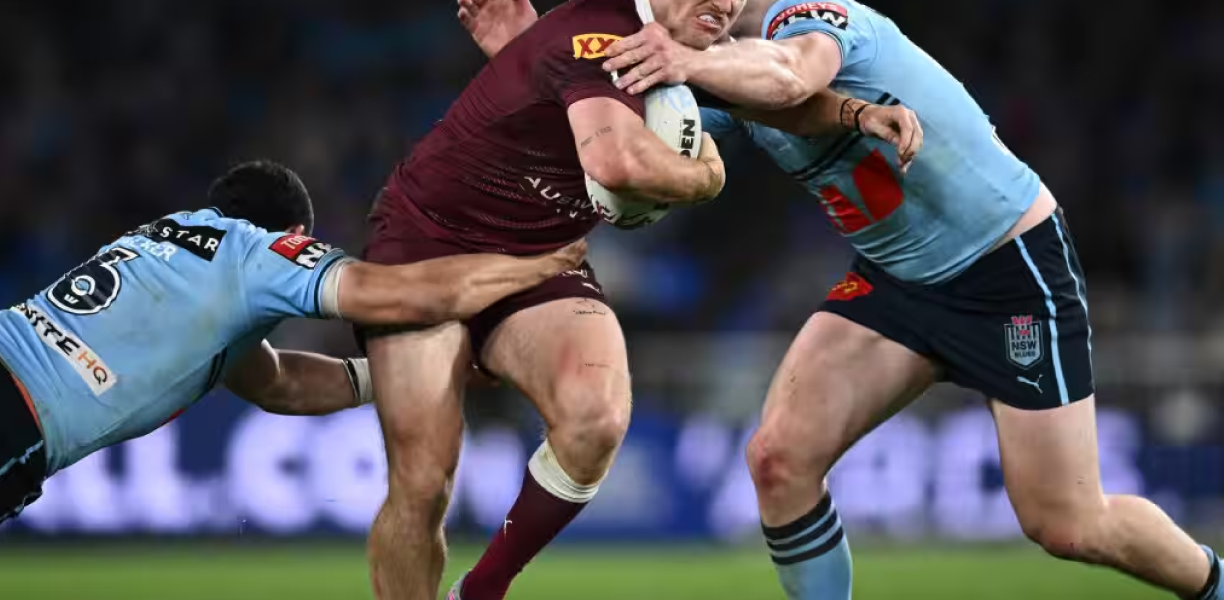
Ruby League is one of the most-watched sports in Australia with the NRL attracting over 224.2 million viewers in 2025 and it is continuing to grow in the UK, Pacific nations, and beyond.
But behind the physicality of the sport, psychological preparation is often less prioritized.
A review published by Australian researchers in early February offers the first comprehensive look at psychological research into elite rugby league, synthesizing 70 studies involving over 7,600 players, coaches, staff, and referees.
The Importance of the Body and the Mind
Rugby league is a high-intensity, full-contact sport where players absorb repeated collisions across grueling match schedules with minimal recovery time.
Research confirms what many already know: the physical load is immense, and it can influence an athlete’s focus, confidence, and overall mental performance.
The review showed that most players average under six hours of sleep per night.
Fatigue and reduced wellbeing can persist for up to 48 hours after a game.
Long-haul travel, congested fixtures, and the relentless pressure of public scrutiny compound these effects, placing athletes under sustained psychological and performance pressure.
What’s particularly telling is that players often report feeling “fine” on wellness questionnaires even when objective measures say otherwise suggesting that athletes are unable to admit that they are struggling.
The Culture of “Toughness” Is a Risk
One of the review’s most striking findings is how deeply ingrained rugby league’s culture of “toughness” often characterized by silence and stoicism can sometimes work against the kind of environment athletes need to perform at their best.
Players who sought psychological support reported stigma from staff and negative attitudes that discouraged open conversations. When athletes feel they cannot speak up about challenges, small issues can go unaddressed and eventually impact focus, preparation, and performance.
The practical implication is clear: high-performing environments are not built on silence. They are built on psychological safety — spaces where athletes can communicate openly, seek support, and address challenges early so they can stay focused and ready to perform.
Culture and Identity
A significant proportion of elite rugby league players come from culturally diverse backgrounds, yet their psychological experiences remain among the least studied in the literature.
For many, family, community, and cultural identity are core sources of motivation and central to why they play and how they perform.
But these deeply held values often collide directly with elite sport’s individualistic, performance-first culture, creating identity strain, internalized pressure, and disengagement.
This is precisely why cultural identity work matters in sport psychology.
Helping athletes define their values of understanding where they come from and how they can coexist with the demands of elite sport.
When athletes have a clear sense of who they are and what drives them, they are better equipped to handle pressure, stay motivated through adversity, and build resilience that lasts beyond the game.
The Transition to Elite Sport
The review also sheds light on what separates players who make it to elite level from those who don’t, and it’s not purely physical.
Elite players typically described supportive, dynamic developmental environments in their formative years.
Semi-elite players, by contrast, more often reported negative developmental experiences that may have constrained their progression.
Key psychological traits associated with successful transitions include intrinsic motivation, coachability, and a well-rounded identity beyond sport.
Rural upbringings, diverse early sport experiences, and strong family and community ties were also common pathways.
Importantly, early specialization wasn’t essential for later developers who combined specialization with competitive experience also made it to the top.
For coaches, academies, and sport psychologists working with emerging talent, this reinforces that the environment you create matters enormously.
Building psychologically safe, culturally responsive learning spaces isn’t just good practice; it may be the difference between developing an elite player and losing one.
What This Means in Practice
The research points to several practical priorities for sport psychologists, clubs, and governing bodies working in rugby league.
Cultural responsiveness is non-negotiable, and at the heart of it is creating psychologically safe environments where athletes feel free to speak about what matters to them.
Whether voicing cultural pressures, building strategies to manage pressure and sustain performance in elite sport, or maintaining motivation and confidence through the challenges ahead – athletes need to feel seen and heard.
When they do, they perform better, and they stay in the game longer.
That’s where sport psychology makes its biggest difference.
Rugby league is a sport of extraordinary physical courage.
But the evidence is clear: the psychological demands are just as significant, and they’ve been neglected for too long.